
Living room · 3 min read
10 Modern Living Room Ideas That Still Feel Warm
Soft curves, warm texture, and a little drama—these rooms get the balance just right.
Modern living rooms get a bad reputation for feeling cold, but the problem is usually the finish, not the style. Clean lines read as warm the moment you introduce texture, a lower light temperature, and one or two pieces with a softer silhouette. Here are ten specific ways to strike that balance.
In this story
- 1. Float the sofa off the wall
- 2. Swap one hard edge for a curve
- 3. Drop your bulb temperature to 2700K
- 4. Layer three light sources, not one
- 5. Size the rug so the front legs land on it
- 6. Mix at least three textures in one palette
- 7. Hang art lower than feels natural
- 8. Repeat your accent color exactly three times
- 9. Give the room one genuine focal point
- 10. Leave one surface deliberately empty
Idea 1
Float the sofa off the wall
Pushing every seat against the walls makes a room feel like a waiting area. Pull the sofa forward even 10–12 inches and run a slim console behind it — the gap reads as intentional, gives you a surface for lamps, and creates a defined conversation zone instead of a perimeter.
Idea 2
Swap one hard edge for a curve
A single rounded element takes the tension out of an angular room. A curved sofa arm, a round coffee table, or an arched mirror is usually enough. Keep the rest of the silhouettes simple so the curve reads as a deliberate choice rather than a competing shape.
Idea 3
Drop your bulb temperature to 2700K
The fastest fix for a living room that feels clinical is the light itself. Most builder-grade fixtures ship at 4000K, which skews blue. Swapping to 2700K warm-white bulbs costs very little and instantly makes white walls and pale upholstery look softer in the evening.
Idea 4
Layer three light sources, not one
Ceiling light alone flattens a room. Aim for an overhead source, a floor or table lamp at roughly eye level when seated, and one low accent — a picture light or a small lamp on a shelf. Put them on separate switches so you can drop to the lower two at night.
Idea 5
Size the rug so the front legs land on it
An undersized rug is the single most common living room mistake, and it makes the whole arrangement look like it's drifting. At minimum, the front legs of every seat should sit on the rug. For most standard rooms that means 8×10 rather than the 5×7 that feels safer in the shop.
Idea 6
Mix at least three textures in one palette
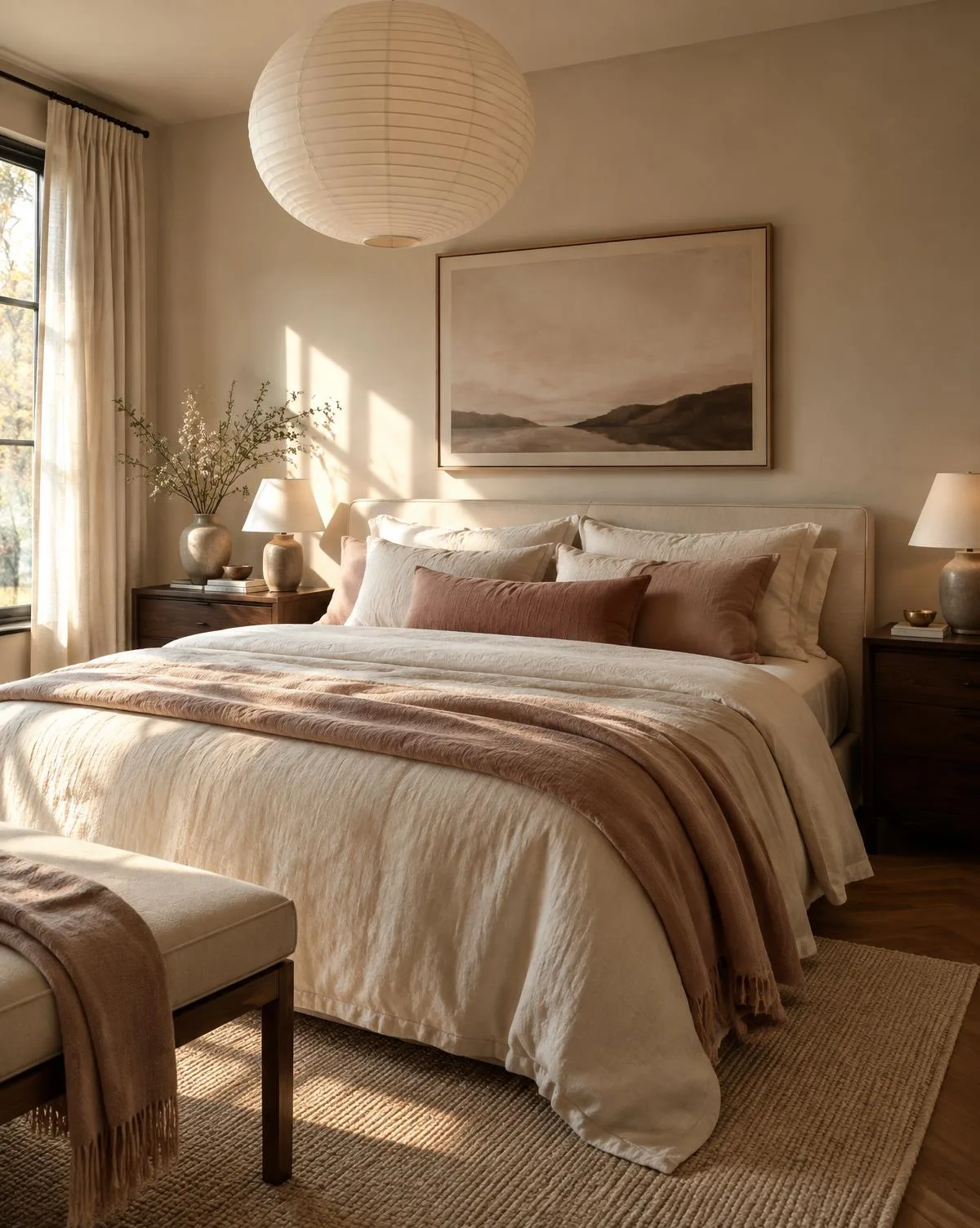
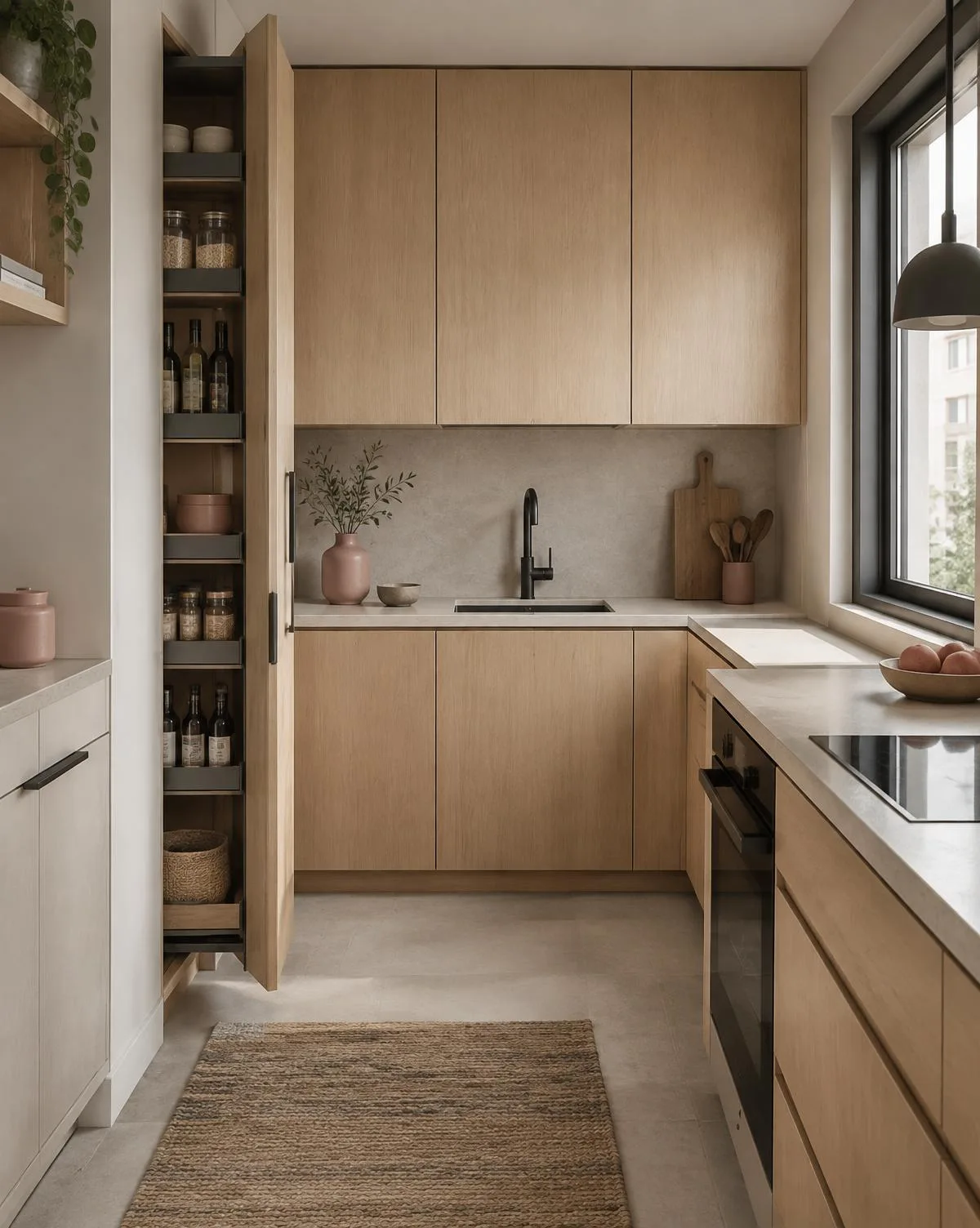
Richness comes from texture, not from adding more colors. Combine something woven, something wooden, and something stone or ceramic while keeping them all within the same tonal family — a boucle chair, an oak table, a travertine bowl. The room gains depth without getting louder.
Idea 7
Hang art lower than feels natural
Gallery standard is 57 inches to the center of the piece, and most people hang well above that. Over a sofa, leave roughly 6–10 inches between the top of the sofa back and the bottom of the frame so the art relates to the furniture instead of floating near the ceiling.
Idea 8
Repeat your accent color exactly three times
One hit of a color looks accidental; scattered everywhere it turns into noise. Pick your accent — blush, olive, ochre — and place it in three spots spread across the room, ideally at different heights. The eye connects them into a rhythm and the palette feels deliberate.
Idea 9
Give the room one genuine focal point
A fireplace, a large window, a single oversized artwork, or a substantial pendant. Choose one and let the furniture orient toward it. Rooms that feel restless usually have two or three elements competing for that job, most often a television and a fireplace on different walls.
Idea 10
Leave one surface deliberately empty
Styling every shelf and table is what pushes a room from layered into cluttered. Keep one visible surface clear — the end of a console, a section of shelving, half the coffee table. The negative space makes everything you did style read as chosen rather than accumulated.