
Living room · 3 min read
10 Small Living Room Ideas That Buy Back Space
Practical moves that make a compact sitting room feel open without giving up comfort.
Small living rooms rarely need less furniture — they need furniture that takes up less visual weight. Most of what makes a compact room feel cramped is solid mass at floor level and a cluttered sightline. These ten changes target both.
In this story
- 1. Choose a sofa with visible legs
- 2. Mount the TV and skip the media unit
- 3. Go bigger on the rug, not smaller
- 4. Hang curtains at ceiling height
- 5. Swap the coffee table for nesting tables
- 6. Build storage upward
- 7. Place a mirror opposite the window
- 8. Hold the palette to three colours
- 9. Make the second seat armless
- 10. Protect one clear walking route
Idea 1
Choose a sofa with visible legs
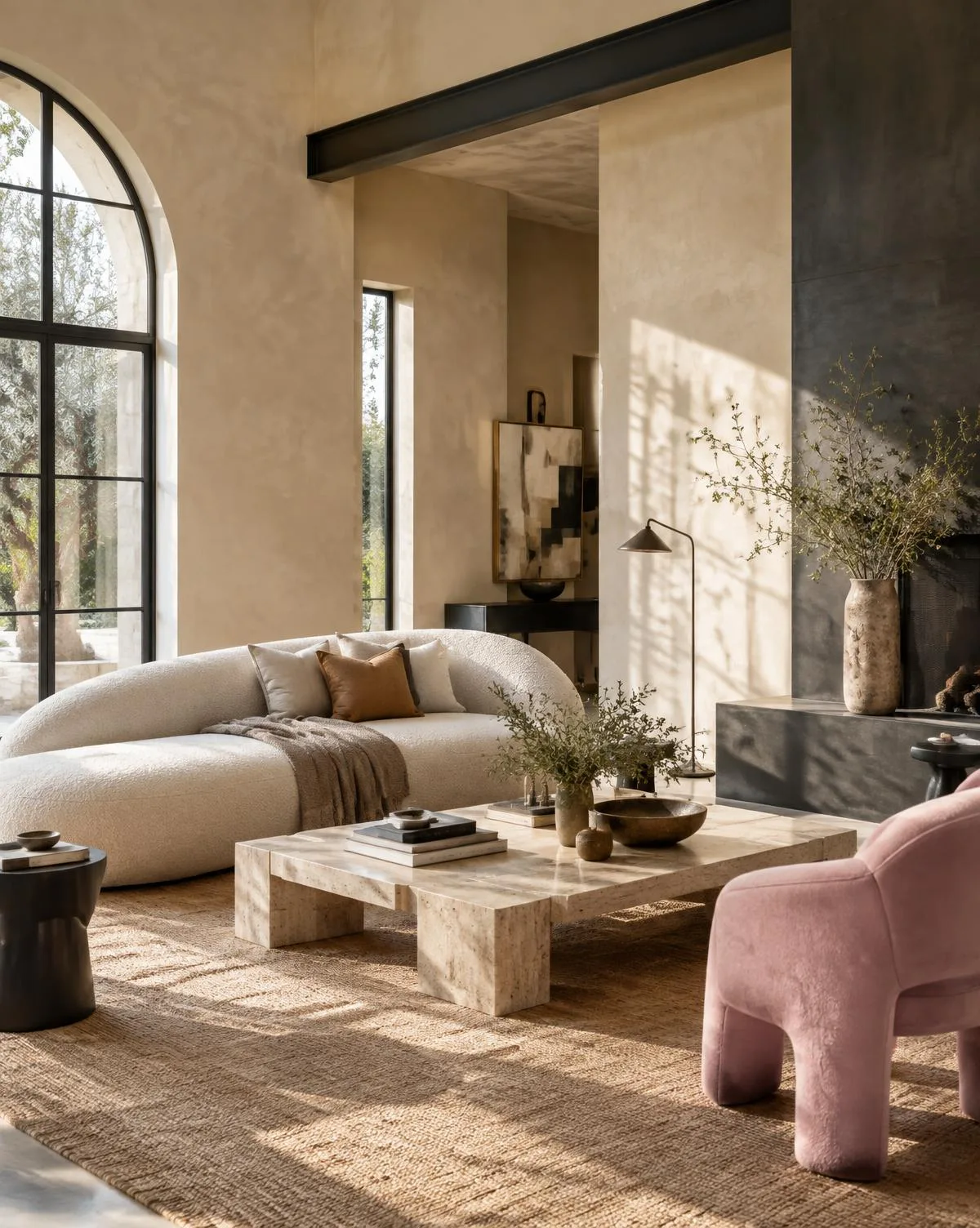
A sofa that sits flush to the floor reads as a solid block. One raised on slim legs lets you see the floor continue underneath, and that glimpse of uninterrupted surface is what makes the room feel like it extends further than it does. Same footprint, noticeably lighter presence.
Idea 2
Mount the TV and skip the media unit
A media console is often the second-largest object in a small living room and it exists mostly to hold a screen. Wall-mounting the TV and moving the devices to a slim floating shelf reclaims a full furniture footprint — usually the difference between a room you edge around and one you walk through.
Idea 3
Go bigger on the rug, not smaller
The instinct in a small room is a small rug, but it fragments the floor into zones and emphasises how little there is. One large rug that reaches under the front legs of all the seating unifies the space and reads as a single, larger room.
Idea 4
Hang curtains at ceiling height
Mount the rod a few inches below the ceiling rather than just above the window frame, and let the fabric fall to the floor. The unbroken vertical line draws the eye upward, which is the cheapest way to make a low-ceilinged room feel taller.
Idea 5
Swap the coffee table for nesting tables
A fixed coffee table occupies the centre of the room permanently whether you need it or not. Two nesting tables give you the same surface when guests arrive and tuck into a fraction of the space the rest of the time.
Idea 6
Build storage upward
Tall, narrow shelving uses the wall area nobody competes for, while a low sideboard of the same capacity eats floor. In a small room, vertical storage is nearly free space — and it pulls the eye up rather than across.
Idea 7
Place a mirror opposite the window
Not on the window wall — facing it. A large mirror reflecting the light source roughly doubles the perceived daylight and reads as a second opening. It's an old trick because it reliably works, and it costs less than any structural change.
Idea 8
Hold the palette to three colours
Every additional colour creates another visual stop, and stops make a small room feel busier and therefore smaller. A wall tone, a furniture tone, and one accent is enough. Add variety through texture instead, which adds depth without adding edges.
Idea 9
Make the second seat armless
Armchairs are typically 8–10 inches wider than the seat they actually provide. An armless chair or a small bench delivers the same seating in meaningfully less width, and it's far easier to move aside when you need the floor.
Idea 10
Protect one clear walking route
Leave at least 30 inches of unobstructed path through the room, even if it costs you a piece of furniture. A room you move through comfortably feels larger than a room with more seating that you have to navigate sideways.