
Bedroom · 3 min read
10 Small Bedroom Ideas That Actually Free Up Space
Storage, lighting, and layout fixes for rooms where the bed takes most of the floor.
In a small bedroom the bed is non-negotiable, so every other decision has to work around it. The useful changes are the ones that move function off the floor — onto walls, under the bed, or out of the room entirely.
In this story
- 1. Replace nightstands with floating shelves
- 2. Put the bed on the longest wall
- 3. Use shallow underbed storage
- 4. Switch to swing-arm wall lights
- 5. Curtain the whole wall, not just the window
- 6. Keep contrast low
- 7. Use the back of the door
- 8. Skip the footboard
- 9. Hang one large piece, not a gallery wall
- 10. Leave some floor visible
Idea 1
Replace nightstands with floating shelves
A small wall-mounted shelf beside the bed holds a book, a glass, and a phone — which is all a nightstand usually does — while leaving the floor beneath clear. Visually it removes two solid objects from a room that can't spare them.
Idea 2
Put the bed on the longest wall
It feels counterintuitive, but centring the bed on the longest uninterrupted wall usually creates one generous walking space rather than two cramped ones. Tucking it into a corner saves floor on paper and makes the remaining space unusable in practice.
Idea 3
Use shallow underbed storage
Deep containers are hard to reach and end up as long-term storage you never open. Shallow, wheeled boxes roughly 6 inches high slide out easily, which means you'll actually use them for out-of-season clothes and spare bedding.
Idea 4
Switch to swing-arm wall lights
Table lamps consume the scarcest surface in the room. Swing-arm lamps mounted either side of the bed give you better reading light, free the shelf entirely, and can be angled away when you're not using them.
Idea 5
Curtain the whole wall, not just the window
Running a curtain track the full width of the wall disguises where the window actually ends. The room reads as having one large opening rather than a small punched hole, and it softens a wall that's otherwise mostly plaster.
Idea 6
Keep contrast low
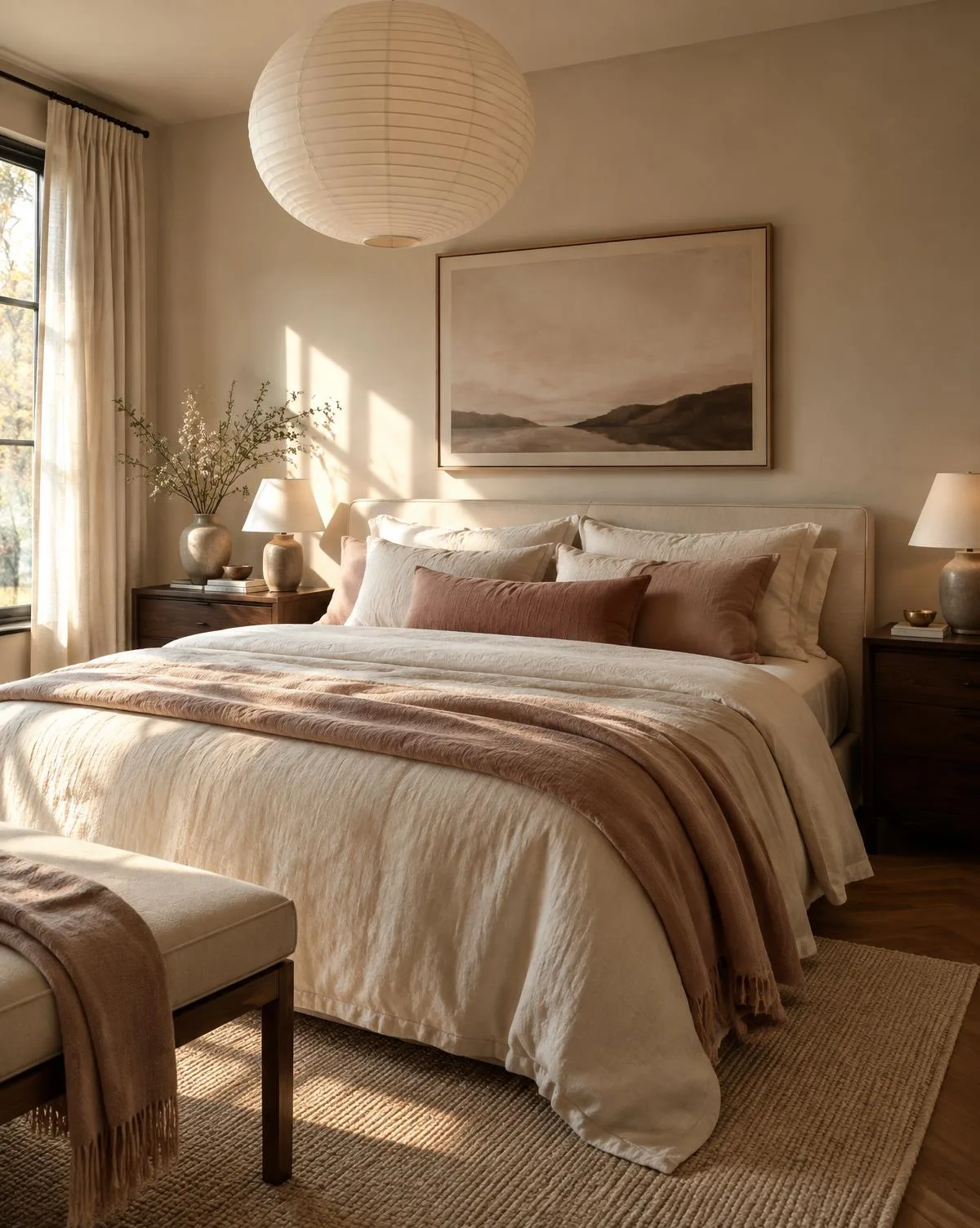
Strong contrast between walls, bedding, and furniture chops a small room into pieces. Keeping everything within a few shades — warm white walls, oatmeal linen, pale timber — lets surfaces blend into each other and blur the room's boundaries.
Idea 7
Use the back of the door
An over-door rack or a row of hooks is genuinely free storage in a room where floor space is the constraint. It suits the items that otherwise end up on a chair: robes, bags, tomorrow's clothes.
Idea 8
Skip the footboard
A footboard adds several inches to the bed's length and creates a visual wall at the end of the room. A frame without one lets the floor and the eye run to the far wall uninterrupted, which matters more in a small room than it does in a large one.
Idea 9
Hang one large piece, not a gallery wall
Multiple small frames create a scattered, busy surface. A single larger piece above the bed gives the room a clear focal point and far fewer visual edges, which reads as calmer and, oddly, as more spacious.
Idea 10
Leave some floor visible
Resist filling every gap with storage furniture. Visible floor around the bed — even a narrow border — is what stops a small bedroom feeling like a cupboard with a mattress in it. If something has to go, choose the thing you use least.